Permanent Pacemaker Implantation in Jabalpur may be recommended for selected people whose heart beats too slowly or whose electrical signals do not travel through the heart normally. A pacemaker is a small electronic device that helps regulate the heartbeat when the heart’s natural electrical system cannot maintain an adequate rhythm. Whether a person needs one depends on their symptoms, heart rhythm recordings, medical history and specialist assessment. Permanent Pacemaker Implantation in Jabalpur should only be considered after an individual evaluation.
Dr. Animesh Gupta is a cardiologist at JIVANTA Health Care Centre in Jabalpur. According to the information provided about his practice, he holds MD (Medicine) and DM (Cardiology) qualifications, received advanced training at Government Jayadeva Hospital in Bengaluru, and worked as a Consultant Cardiologist at Apollo Hospital, Hyderabad. His clinical work includes invasive and non-invasive cardiac procedures. JIVANTA Health Care Centre lists permanent pacemakers among its cardiac services.
People searching for Pacemaker Implantation in Wright Town, Jabalpur may have questions about symptoms, when a device is advised, how the procedure is performed, and what recovery involves. A local search for Pacemaker Implantation in Wright Town, Jabalpur should lead patients to clear information about assessment, procedure planning and follow-up. This guide explains the basics of pacemaker therapy in patient-friendly language. It is general information and cannot replace an individual assessment by a qualified cardiologist.
What Is a Permanent Pacemaker?
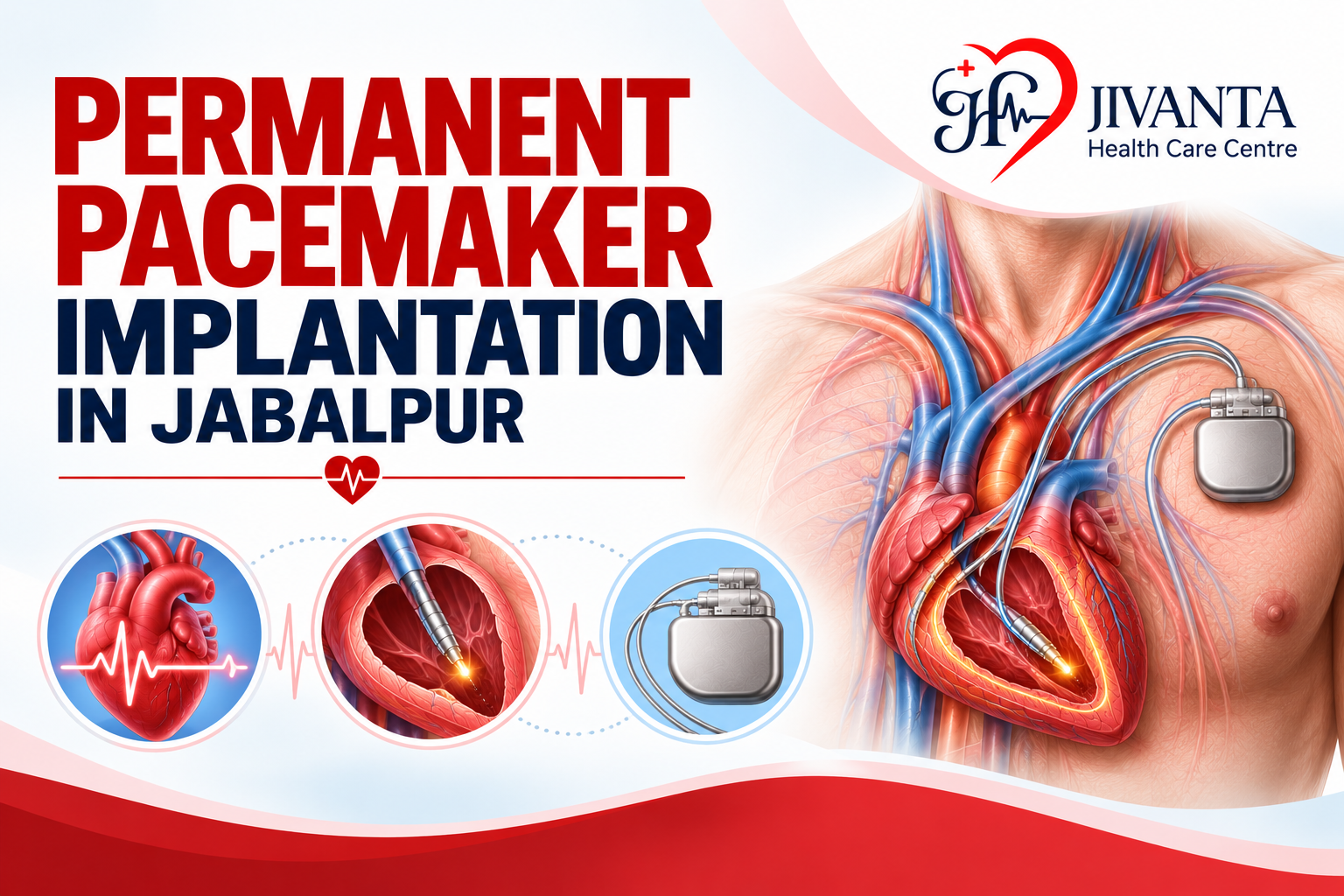
A permanent pacemaker is a small electronic device placed under the skin, usually near the upper chest. One or more insulated wires, called leads, may connect the device to the heart. The pacemaker monitors the heart’s electrical activity and delivers electrical impulses when needed to help maintain an appropriate heart rate.
The device does not treat every type of heart disease and is not required for every irregular heartbeat. It is mainly used for certain slow heart rhythms and problems with the heart’s electrical conduction system. The type of device and lead arrangement depend on the rhythm problem, the heart’s condition and the patient’s overall health. A person seeking Pacemaker Implantation in Vijay Nagar, Jabalpur should receive an explanation of the recommended system and its purpose.
A person exploring Pacemaker Implantation in Napier Town, Jabalpur should know that the decision is based on clinical findings, not simply on a low pulse reading. This is a key part of planning Permanent Pacemaker Implantation in Jabalpur appropriately.
Why Might Someone Need a Pacemaker?
The heart has an electrical system that coordinates its contractions. If the electrical impulse is generated too slowly or is delayed or blocked as it travels through the heart, the heartbeat may become too slow to meet the body’s needs.
A pacemaker may be considered for certain conditions. People may also search for Slow Heartbeat Treatment in Jabalpur or Heart Block Treatment in Jabalpur when trying to understand these rhythm problems.
Slow Heart Rate (Bradycardia)
Bradycardia means that the heart rate is slower than expected. Some people naturally have a low resting heart rate without symptoms, so a number alone does not automatically mean a pacemaker is required. A device may be considered when a slow rhythm is linked to symptoms or creates a clinically important risk.
Heart Block
Heart block occurs when electrical signals between the upper and lower chambers of the heart are delayed or interrupted. The seriousness varies by type and degree. Some forms require monitoring, while advanced forms may need a pacemaker. Patients searching for Pacemaker Implantation in Wright Town, Jabalpur should have the type of heart block and its severity explained by their cardiologist.
Sinus Node Dysfunction
The sinus node normally initiates the heartbeat. If it does not work properly, the heart may beat too slowly or pause. Treatment depends on the rhythm pattern and whether symptoms are related to it.
Certain Rhythm Problems After Cardiac Procedures
In some patients, a significant conduction problem develops after heart surgery or another cardiac procedure. If it is not expected to resolve, permanent pacing may be recommended.
For people researching Pacemaker Implantation in Vijay Nagar, Jabalpur, it is important to understand that only a cardiologist can determine whether a pacemaker is appropriate. Patients looking into Pacemaker Implantation in Vijay Nagar, Jabalpur should bring relevant reports and discuss symptoms during assessment. Some causes of a slow heart rate, including certain medicines or temporary medical conditions, may need to be reviewed before a permanent device is considered.
Symptoms That May Need Cardiac Evaluation
Symptoms associated with a slow or interrupted heartbeat can vary. Some people notice only tiredness, while others may experience more serious episodes.
Possible symptoms include:
- Dizziness or light-headedness
- Fainting or near-fainting
- Unusual fatigue
- Shortness of breath during ordinary activity
- Reduced exercise tolerance
- Confusion or weakness during episodes
- Awareness of pauses or an unusually slow pulse
These symptoms can also occur because of other health conditions. They should not be used to diagnose a rhythm disorder without appropriate assessment.
People looking for Pacemaker Implantation in Adhartal, Jabalpur should seek medical evaluation if symptoms are recurring, unexplained or affecting everyday activity. Fainting, severe breathlessness, chest pain or symptoms that begin suddenly may require urgent assessment rather than a routine appointment.

How Is the Need for a Pacemaker Assessed?
Before recommending a device, a cardiologist reviews symptoms, medical history, medicines and test results. The aim is to establish whether the symptoms are linked to a rhythm problem and whether pacing is likely to help.
Electrocardiogram (ECG)
An ECG records the heart’s electrical activity. It can identify several rhythm and conduction abnormalities, although a short ECG may not capture an intermittent problem.
Holter or Ambulatory Rhythm Monitoring
A Holter monitor or another wearable rhythm monitor records heart activity over a longer period. It may help identify pauses or slow rhythms that occur only occasionally.
Echocardiogram
An echocardiogram uses ultrasound to assess the heart’s structure and pumping function. It may be recommended depending on the suspected condition and the patient’s medical history.
Blood Tests and Medication Review
Blood tests can help identify certain reversible contributors to rhythm abnormalities. A clinician may also review medicines that can slow the heart rate.
Additional Testing
Further testing may be required in selected cases. The choice depends on the patient’s symptoms, ECG findings and overall clinical situation.
A person searching for Permanent Pacemaker Implantation in Jabalpur should bring previous ECGs, monitoring reports, prescriptions and details of fainting or dizziness episodes to the appointment when possible. A Heart Pacemaker Surgery in Jabalpur discussion should also cover the expected benefit, possible complications and follow-up needs.
Permanent Pacemaker Implantation in Jabalpur: How the Procedure Is Performed
The procedure is planned after the cardiology team reviews the diagnosis, the type of device required and the patient’s health status. The exact technique can differ depending on the pacemaker system and individual circumstances.
In a common transvenous approach, the procedure generally involves the following steps:
- Preparation: The team reviews test results, medicines, allergies and relevant medical history. The patient receives instructions about fasting and medication adjustments if required.
- Anaesthesia and monitoring: The procedure is commonly performed with local anaesthesia, sometimes alongside medicines to help the patient relax. The patient’s heart rhythm, blood pressure and oxygen levels are monitored.
- Small incision: A small cut is made in the upper chest, usually below the collarbone.
- Lead placement: When a lead-based system is used, the clinician guides the lead or leads through a vein and positions them in the appropriate part of the heart using imaging guidance.
- Device connection: The leads are connected to the pacemaker generator, which is placed in a pocket under the skin.
- Testing and closure: The team checks the system’s electrical measurements and function before closing the incision and applying a dressing.
Some newer pacing approaches use different lead placement techniques, and not every patient receives the same type of system. The procedure duration and hospital stay vary according to the device, the patient’s health and whether complications occur.
For those considering Pacemaker Implantation in Madan Mahal, Jabalpur, the cardiologist should explain the proposed device, the reason it is recommended, expected benefits, risks and alternative options before consent is given. This discussion is an essential step before Permanent Pacemaker Implantation in Jabalpur.
Is Pacemaker Implantation a Major Procedure?
Pacemaker implantation is a common cardiac procedure, but it is still an invasive medical intervention and has potential risks. The risk profile depends on the patient’s health, the type of device and the procedural circumstances.
Possible complications include bleeding, bruising, infection, blood vessel injury, a collapsed lung, lead displacement or problems with the device. Serious complications are less common, but patients should understand the risks before proceeding.
The care team uses sterile technique, monitoring and device checks to reduce avoidable risks. Patients should follow all pre-procedure and aftercare instructions and ask questions about anything they do not understand. A patient planning Pacemaker Implantation in Madan Mahal, Jabalpur should know how to reach the care team after discharge. For Pacemaker Implantation in Madan Mahal, Jabalpur, the care team should explain the expected recovery process and warning signs.
Benefits of a Permanent Pacemaker
For patients with an appropriate indication, a pacemaker can help maintain a suitable heart rate and reduce symptoms related to a slow heartbeat. Depending on the underlying rhythm problem, potential benefits may include:
- Fewer episodes of dizziness or fainting related to bradycardia
- Improved tolerance for daily activities when symptoms were caused by a slow rhythm
- More reliable support for certain conduction disorders
- Better management of specific heart rhythm conditions
Benefits vary between patients. A pacemaker does not remove all risks associated with heart disease, and it may not resolve symptoms caused by a separate condition.
People searching for Pacemaker Implantation in Wright Town, Jabalpur should discuss the expected benefit in their particular case rather than relying on general promises about outcomes. For Pacemaker Implantation in Wright Town, Jabalpur, realistic expectations and a clear recovery plan are important.
Recovery After Pacemaker Implantation
Recovery depends on the type of procedure, the patient’s health and the instructions provided by the treating team. Patients are monitored after implantation to check the wound, heart rhythm and device function.
First 24–48 Hours
The clinical team checks the incision and device settings and provides instructions about wound care, medicines and activity. Some patients go home the same day or the next day, while others may need longer observation.
Care at Home
Patients should keep the incision clean and dry according to the instructions they receive. They should watch for increasing redness, swelling, warmth, drainage, fever or worsening pain and contact the care team if these occur.
Arm and Shoulder Movement
The treating team may recommend temporary limits on heavy lifting or certain arm movements on the side of implantation while the leads settle. Instructions differ by device and procedure, so patients should follow their own discharge guidance rather than a general timetable.
Returning to Routine Activities
Walking and light activity may be encouraged as advised. Driving, work, exercise and lifting should be resumed according to the cardiologist’s instructions and local regulations.
Patients searching for Pacemaker Implantation in Napier Town, Jabalpur should ask for written aftercare instructions before leaving the hospital and know whom to contact if concerns arise. For Pacemaker Implantation in Napier Town, Jabalpur, post-procedure advice should be specific to the device and patient.
Follow-Up and Pacemaker Checks
Regular follow-up is essential after implantation. This is also important for people seeking Pacemaker Implantation in Napier Town, Jabalpur, because device settings and battery status need ongoing review. Pacemaker Follow-Up in Jabalpur can include device interrogation, battery checks and review of symptoms according to the care plan.
During device checks, the team may assess battery status, lead measurements, stored rhythm information and programmed settings. Follow-up can be performed in person and, where available and appropriate, through remote monitoring.
The frequency of checks depends on the device, time since implantation, the patient’s condition and the clinic’s protocol. Patients planning Pacemaker Implantation in Adhartal, Jabalpur should ask how device follow-up will be arranged. A pacemaker battery generally lasts for years, but battery life varies with the device and how much pacing is required. The generator is replaced when needed; the leads may not always need replacement.
For patients looking for Pacemaker Implantation in Vijay Nagar, Jabalpur, follow-up planning should be part of the treatment discussion from the beginning, not an afterthought.
Living With a Pacemaker
Most people with a pacemaker can return to many normal activities after recovery, subject to their clinician’s advice and underlying heart condition. Carry the pacemaker identification card and tell healthcare professionals about the device before medical procedures.
Everyday electronic devices are generally safe when used according to manufacturer guidance. However, strong magnets and certain medical or industrial equipment may interfere with a pacemaker. Patients should follow the specific instructions supplied with their device and ask their care team about workplace equipment, security systems, MRI scans or other procedures.
A pacemaker does not mean that a person must avoid all physical activity. The appropriate level of exercise depends on the heart condition, recovery and advice from the treating clinician.
Permanent Pacemaker Implantation in Jabalpur: Choosing the Right Cardiac Team
Choosing a cardiac team involves more than location. Patients should understand the diagnosis, why implantation is being recommended, what type of device is proposed and what follow-up support will be available. A detailed consultation helps people considering Permanent Pacemaker Implantation in Jabalpur make an informed decision.
Useful questions to ask include:
- What rhythm problem has been identified?
- Is the pacemaker necessary now, or are other options appropriate?
- What type of pacemaker is recommended and why?
- What are the expected benefits and potential risks?
- How long may recovery take?
- What restrictions will apply after the procedure?
- How often will device checks be required?
- Whom should the patient contact if symptoms or wound problems develop?
Patients considering Pacemaker Implantation in Adhartal, Jabalpur should feel comfortable asking the cardiologist to explain the findings and treatment plan in language they understand. A consultation for Pacemaker Implantation in Adhartal, Jabalpur should cover both the immediate procedure and long-term device checks.

Why Dr. Animesh Gupta and JIVANTA Health Care Centre?
The information shared about Dr. Animesh Gupta describes him as an MD (Medicine), DM (Cardiology) heart specialist who received advanced training at Government Jayadeva Hospital, Bengaluru, and worked as a Consultant Cardiologist at Apollo Hospital, Hyderabad. The practice information lists invasive and non-invasive cardiac procedures and permanent pacemaker services at JIVANTA Health Care Centre in Jabalpur.
A cardiac consultation can help patients understand whether symptoms such as fainting, dizziness or an unusually slow pulse may be related to a heart rhythm problem. Searching for a Heart Rhythm Specialist in Jabalpur or an experienced Cardiologist in Jabalpur may help patients identify the type of specialist who evaluates these concerns. The assessment may include ECG, rhythm monitoring and other tests according to the clinical situation.
People searching for Permanent Pacemaker Implantation in Jabalpur should receive a clear explanation of the diagnosis, expected benefits, potential risks, recovery plan and long-term device checks. Treatment decisions should be made individually, based on clinical findings and informed discussion between the patient and cardiologist. For appropriate candidates, Permanent Pacemaker Implantation in Jabalpur is planned with attention to the diagnosis, device selection and aftercare.
Pacemaker Care for Nearby Jabalpur Areas
People from Wright Town who are researching Pacemaker Implantation in Wright Town, Jabalpur can prepare for a consultation by bringing ECG reports, medication lists and details of any fainting episodes. Discussing these details can help the cardiologist understand the rhythm concern. For Pacemaker Implantation in Wright Town, Jabalpur, this preparation can make the consultation more focused.
Patients from Napier Town looking into Pacemaker Implantation in Napier Town, Jabalpur should ask how the device will be checked after implantation and what symptoms require follow-up. Device care is a long-term part of pacemaker treatment. Anyone considering Pacemaker Implantation in Napier Town, Jabalpur should confirm the follow-up schedule before discharge. This is also important for people seeking Pacemaker Implantation in Napier Town, Jabalpur, because device settings and battery status need ongoing review.
For people in Vijay Nagar, information about Pacemaker Implantation in Vijay Nagar, Jabalpur should include the reason for pacing, the proposed device type and the recovery instructions. The decision should always be based on the individual’s diagnosis. A consultation about Pacemaker Implantation in Vijay Nagar, Jabalpur should address individual risks and expected benefits.
Those considering Pacemaker Implantation in Adhartal, Jabalpur can ask the cardiology team to explain the procedure, potential risks and activity restrictions in straightforward language. A clear understanding can make it easier to follow the care plan. Patients arranging Pacemaker Implantation in Adhartal, Jabalpur should keep the written aftercare advice available at home.
Patients from Madan Mahal searching for Pacemaker Implantation in Madan Mahal, Jabalpur should also plan for regular device checks after recovery. Follow-up appointments help the care team review battery status and device function. For Pacemaker Implantation in Madan Mahal, Jabalpur, long-term monitoring remains an important part of care.
Frequently Asked Questions – Pacemaker Implantation in Adhartal, Jabalpur
1. What is a permanent pacemaker?
A permanent pacemaker is an implanted electronic device that helps regulate the heart rate when the heart’s natural electrical system cannot maintain an adequate rhythm.
2. Who may need a pacemaker?
Some people with symptomatic bradycardia, significant heart block or selected electrical conduction disorders may need one. The decision depends on test results and specialist assessment.
3. Does every slow heartbeat require a pacemaker?
No. A slow heart rate may be normal in some people. A pacemaker is considered based on the underlying cause, symptoms and clinical findings.
4. How long does implantation take?
The procedure often takes around one to two hours, but duration varies with the device and patient circumstances. The treating team can provide a more relevant estimate.
5. Is the procedure performed under general anaesthesia?
Many conventional pacemaker procedures are performed using local anaesthesia, sometimes with sedation. The approach depends on the patient and procedure.
6. How long is the hospital stay?
Some patients leave the same day or the following day, while others need longer observation. The decision depends on recovery and medical circumstances.
7. Will a pacemaker cure all heart problems?
No. It treats specific rhythm problems. It does not directly treat every cause of chest pain, blocked arteries, heart failure or other heart conditions.
8. How long does a pacemaker battery last?
Battery life varies by device and pacing requirements and commonly lasts several years. Routine checks help estimate battery status.
9. Can a person exercise with a pacemaker?
Many people can return to suitable physical activity after recovery. The type and intensity of exercise should be discussed with the treating cardiologist.
10. What symptoms after implantation need medical attention?
Fever, increasing redness or drainage at the wound, worsening swelling, new breathlessness, fainting or significant chest pain require prompt medical advice. Severe symptoms may require emergency care.
11. Are follow-up visits necessary?
Yes. Follow-up helps check device function, battery status, lead measurements and the patient’s heart rhythm.
12. Can a person use a mobile phone with a pacemaker?
Usually, yes, when manufacturer guidance is followed. Patients should ask their device team about recommended distances and any specific precautions for their model.
13. Can someone with a pacemaker undergo an MRI?
It depends on the specific pacemaker system and clinical setting. Some systems are MRI-conditional under defined protocols. Always tell the imaging team about the device before an MRI.
14. Is pacemaker implantation suitable for every patient with dizziness?
No. Dizziness has many possible causes. Assessment is needed to determine whether a heart rhythm problem is responsible.
15. What is important after discharge?
Follow the wound-care and activity instructions, take medicines as prescribed, attend device checks and contact the care team if concerning symptoms occur.
Conclusion – Pacemaker Implantation in Adhartal, Jabalpur
Permanent Pacemaker Implantation in Jabalpur may be recommended when a person has a clinically significant slow heartbeat or an electrical conduction problem that requires pacing. Careful assessment helps determine whether a device is needed, which system is appropriate and what follow-up will be required.
Patients searching for Pacemaker Implantation in Madan Mahal, Jabalpur, Pacemaker Implantation in Napier Town, Jabalpur or other nearby areas should seek advice from a qualified cardiologist and discuss the potential benefits, risks and alternatives for their individual condition. Dr. Animesh Gupta’s profile at JIVANTA Health Care Centre lists permanent pacemaker services as part of its cardiac care offering. Regular follow-up and adherence to device-care guidance remain important after implantation.