A Cardiologist in Jabalpur evaluates and treats conditions affecting the heart and circulatory system, including symptoms such as chest discomfort, breathlessness, irregular heartbeat, dizziness, and palpitations. Heart palpitations are sensations in which a person becomes unusually aware of their heartbeat. The heart may feel as though it is beating too fast, pounding, fluttering, skipping a beat, or beating irregularly.
Palpitations can occur temporarily because of stress, anxiety, caffeine, lack of sleep, exercise, or certain medicines. However, recurrent or unexplained palpitations may sometimes be associated with an abnormal heart rhythm or another cardiovascular condition. A Heart Specialist in Jabalpur can assess the symptoms, medical history, heart rate, blood pressure, and other factors to determine whether further cardiac testing is required.
Dr. Animesh Gupta is an MD Medicine, DM Cardiology, Interventional Cardiologist and FSCAI in Jabalpur. His cardiac services include ECG, Holter monitoring, echocardiography, coronary angiography, angioplasty, pacemaker implantation, cardiac imaging, and management of heart-related conditions.
What Are Heart Palpitations?
Heart palpitations are sensations of being aware of your heartbeat. They can occur while resting, exercising, lying down, or during stressful situations.
People may describe palpitations as:
-
- A pounding heartbeat
- Rapid heartbeat
- Fluttering in the chest
- Skipped beats
- Extra beats
- Irregular heartbeat
- A sensation of the heart racing
Palpitations may last for a few seconds or continue for several minutes or longer. The frequency and duration of episodes can provide useful information during a cardiac evaluation.
A Heart Doctor in Jabalpur may ask when the palpitations occur, how long they last, whether they are associated with physical activity, and whether other symptoms develop at the same time.
What Causes Heart Palpitations?
Palpitations can have many possible causes. Some are temporary and harmless, while others may be associated with an underlying heart rhythm disorder.
Common triggers and causes include:
- Stress
- Anxiety
- Excessive caffeine
- Lack of sleep
- Dehydration
- Fever
- Physical exertion
- Certain medications
- Thyroid abnormalities
- Anemia
- Electrolyte disturbances
- Abnormal heart rhythms
- Certain heart diseases
A Cardiac Specialist in Jabalpur may consider both cardiac and non-cardiac causes when evaluating recurrent palpitations.
Identifying the trigger does not necessarily confirm the cause. Further assessment may be necessary when symptoms are persistent or occur with other warning signs.
Can Stress and Anxiety Cause Palpitations?
Stress and anxiety can temporarily increase heart rate and make a person more aware of their heartbeat. Emotional stress can activate the body’s natural response to perceived danger, causing the heart to beat faster.
Some people may notice palpitations before an important event, during emotional distress, after inadequate sleep, or during periods of significant worry.
However, not every episode of palpitations should automatically be attributed to anxiety. A Heart Rhythm Specialist in Jabalpur may recommend an ECG or rhythm monitoring when the symptoms are recurrent, unexplained, or associated with dizziness, fainting, chest discomfort, or breathlessness.
What Are the Different Types of Abnormal Heart Rhythms?
The heart normally beats according to an electrical rhythm that coordinates contraction of the heart chambers. Problems with this electrical system can result in arrhythmias.
Some rhythm abnormalities include:
- Atrial fibrillation
- Atrial flutter
- Supraventricular tachycardia
- Premature beats
- Ventricular arrhythmias
- Bradycardia
- Other conduction abnormalities
Some arrhythmias may produce no obvious symptoms, while others can cause palpitations, dizziness, weakness, breathlessness, chest discomfort, or fainting.
Arrhythmia Treatment in Jabalpur depends on the specific rhythm problem, its frequency, underlying cause, associated heart disease, and overall health.
What Are the Warning Signs With Heart Palpitations?
Most palpitations are not emergencies, but certain symptoms should not be ignored.
Important warning signs include:
- Chest pain or pressure
- Severe breathlessness
- Fainting
- Near-fainting
- Severe dizziness
- Very rapid heartbeat
- Persistent irregular heartbeat
- Palpitations during physical activity
- New palpitations in someone with known heart disease
- Palpitations associated with extreme weakness
A Cardiac Doctor in Jabalpur may recommend prompt evaluation when palpitations occur with these symptoms.
Sudden severe chest pain, severe breathing difficulty, loss of consciousness, or other potentially life-threatening symptoms require emergency medical attention.
When Should You See a Cardiologist in Jabalpur for Palpitations?
A Cardiologist in Jabalpur may be consulted when palpitations are frequent, prolonged, recurrent, or associated with other symptoms.
Evaluation may be appropriate when:
- Palpitations occur repeatedly
- Episodes last longer than a few moments
- The heartbeat feels persistently irregular
- Symptoms occur during exercise
- Dizziness occurs with palpitations
- There is unexplained fainting
- Chest discomfort occurs
- There is a personal history of heart disease
- There is a family history of rhythm disorders
- Symptoms are becoming more frequent
A detailed cardiac evaluation can help determine whether the sensation is caused by an abnormal rhythm or another factor.
How Are Heart Palpitations Diagnosed?
Diagnosis begins with a detailed medical history and physical examination.
A doctor may ask about:
- When the palpitations started
- How often they occur
- How long episodes last
- What triggers them
- Whether they occur during exercise
- Associated chest discomfort
- Breathlessness
- Dizziness
- Fainting
- Caffeine intake
- Medication use
- Previous heart conditions
- Thyroid or other medical conditions
The heart rate and blood pressure may also be checked.
A Heart Checkup in Jabalpur may include one or more cardiac investigations depending on the symptoms and suspected cause.
What Is an ECG Test in Jabalpur?
An electrocardiogram, or ECG, records the electrical activity of the heart. It is a commonly used cardiac test that can provide information about heart rate and rhythm.
An ECG Test in Jabalpur may help identify certain arrhythmias, conduction abnormalities, signs of previous heart damage, or other electrical changes.
However, palpitations may not occur while the ECG is being recorded. If the heartbeat is normal during a short ECG but symptoms continue intermittently, longer rhythm monitoring may be considered.
What Is a Holter Monitor Test in Jabalpur?
A Holter monitor is a portable device that records the heart’s electrical activity continuously over an extended period. It can be particularly useful when palpitations occur intermittently and are not captured during a standard ECG.
A Holter Monitor Test in Jabalpur may be recommended for patients experiencing:
- Recurrent palpitations
- Irregular heartbeat
- Unexplained dizziness
- Fainting or near-fainting
- Suspected intermittent arrhythmia
- Episodes that occur at different times of the day
The monitoring period depends on the patient’s symptoms and the type of device used.
Dr. Animesh Gupta’s website lists Holter monitoring as one of his cardiac diagnostic services and describes its use for evaluating intermittent rhythm abnormalities.
Can Echocardiography Help Evaluate Palpitations?
Echocardiography uses ultrasound to create images of the heart. It can provide information about heart chambers, valves, pumping function, and certain structural abnormalities.
An Echocardiography Test in Jabalpur may be considered when palpitations occur with other symptoms or when there is a reason to evaluate the heart’s structure and function.
An echocardiogram does not directly replace rhythm monitoring. ECG and Holter monitoring evaluate electrical activity, while echocardiography primarily evaluates heart structure and function.
What Is Arrhythmia?
An arrhythmia is an abnormality in the heart’s rhythm. The heart may beat too quickly, too slowly, or irregularly.
Some arrhythmias are relatively minor, while others may require treatment because they can affect blood flow or increase the risk of complications.
Symptoms may include:
- Palpitations
- Dizziness
- Weakness
- Breathlessness
- Chest discomfort
- Fatigue
- Fainting
A Heart Rhythm Disorder Specialist in Jabalpur may determine the type of arrhythmia through ECG, Holter monitoring, event monitoring, or other cardiac investigations.
What Is Atrial Fibrillation?
Atrial fibrillation is an irregular heart rhythm originating from the upper chambers of the heart. The heartbeat may become irregular and sometimes rapid.
Some people have noticeable symptoms, while others may not feel any change.
Possible symptoms include:
- Palpitations
- Irregular heartbeat
- Breathlessness
- Fatigue
- Dizziness
- Reduced exercise tolerance
Atrial fibrillation requires appropriate medical assessment because it can be associated with an increased risk of blood clots and stroke.
The treatment approach depends on the patient’s age, symptoms, heart condition, risk factors, and type of rhythm abnormality.
Can Palpitations Be Related to High Blood Pressure?
High blood pressure does not always directly cause a noticeable heartbeat sensation. However, hypertension can contribute to changes in cardiovascular health over time.
People with high blood pressure may also have other cardiovascular risk factors, including diabetes, high cholesterol, obesity, smoking, or a family history of heart disease.
A Hypertension Specialist in Jabalpur may assess blood pressure alongside other cardiovascular risk factors and determine whether additional heart evaluation is appropriate.
Regular blood pressure monitoring can help identify persistent hypertension even when a person has no obvious symptoms.
Can Thyroid Problems Cause Palpitations?
Thyroid hormones influence metabolism and cardiovascular function. Excess thyroid hormone can increase heart rate and may contribute to palpitations or certain abnormal rhythms.
When palpitations are recurrent and the clinical history suggests a possible thyroid problem, a doctor may recommend blood tests to assess thyroid function.
This is one reason a complete assessment is important instead of assuming that every episode of palpitations is caused by a primary heart condition.
Can Caffeine and Lifestyle Habits Trigger Palpitations?
Caffeine, inadequate sleep, dehydration, alcohol, intense physical exertion, stress, and certain stimulants may trigger palpitations in some individuals.
People who repeatedly experience palpitations may benefit from observing whether symptoms occur after particular foods, drinks, medications, stressful situations, or sleep deprivation.
Keeping a record of the timing, duration, triggers, and associated symptoms can provide useful information during a Cardiac Consultation in Jabalpur.
How Are Heart Palpitations Treated?
Treatment depends on the underlying cause.
If palpitations are related to a temporary trigger such as dehydration, excessive caffeine, fever, or another reversible factor, addressing that cause may help.
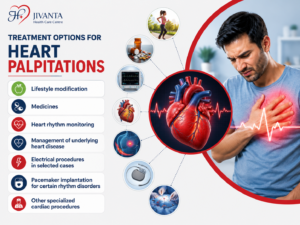
When an arrhythmia is diagnosed, treatment may involve:
- Lifestyle modification
- Medicines
- Heart rhythm monitoring
- Management of underlying heart disease
- Electrical procedures in selected cases
- Pacemaker implantation for certain rhythm disorders
- Other specialized cardiac procedures
The treatment approach should be based on the specific rhythm abnormality and the patient’s overall cardiovascular condition.
When Is a Pacemaker Needed?
A pacemaker is a device used to help maintain an appropriate heart rate in selected patients with certain slow heart rhythms or conduction problems.
Symptoms that may occur with significant bradycardia include:
- Dizziness
- Fainting
- Fatigue
- Weakness
- Reduced exercise tolerance
- Shortness of breath
A Pacemaker Specialist in Jabalpur may evaluate the heart rhythm and determine whether pacemaker implantation is appropriate.
Pacemaker treatment is not required for every person with a slow heart rate. The decision depends on the underlying rhythm abnormality, symptoms, and clinical findings.
Can Palpitations Be Related to Other Heart Diseases?
Palpitations may sometimes occur alongside other cardiovascular conditions, including valve disease, cardiomyopathy, coronary artery disease, heart failure, or structural abnormalities.
For this reason, a complete evaluation may be particularly important when palpitations occur with chest pain, breathlessness, reduced exercise tolerance, swelling of the legs, or fainting.
An Interventional Cardiologist in Jabalpur can evaluate cardiovascular conditions and determine whether diagnostic or interventional procedures are appropriate based on the patient’s condition.
About Dr. Animesh Gupta – Interventional Cardiologist in Jabalpur
Dr. Animesh Gupta is an MD Medicine, DM Cardiology, Interventional Cardiologist and FSCAI in Jabalpur. His website highlights a range of diagnostic and interventional cardiac services.
His services include ECG, Holter monitoring, echocardiography, coronary angiography, angioplasty, pacemaker implantation, cardiac CT/MRI, and management of conditions including heart failure and hypertension.
As a Cardiologist in Jabalpur, Dr. Animesh Gupta evaluates patients with cardiac symptoms and helps determine whether diagnostic testing, medical management, rhythm monitoring, or an interventional procedure may be appropriate.
The exact approach depends on the patient’s symptoms, cardiovascular risk factors, medical history, examination findings, and test results.
Frequently Asked Questions About Heart Palpitations
1. What are heart palpitations?
Heart palpitations are sensations of feeling the heartbeat. They may feel like pounding, fluttering, racing, skipping, or irregular beats.
2. Are heart palpitations always dangerous?
No. Palpitations can occur due to stress, caffeine, exercise, dehydration, or lack of sleep. However, recurrent palpitations or symptoms associated with chest pain, fainting, or severe breathlessness require medical evaluation.
3. When should I see a Cardiologist in Jabalpur?
A Cardiologist in Jabalpur should be considered when palpitations are recurrent, prolonged, occur during exercise, or are associated with dizziness, fainting, chest discomfort, or breathlessness.
4. What is an ECG Test in Jabalpur?
An ECG records the electrical activity of the heart and can help identify certain rhythm and conduction abnormalities.
5. What is a Holter Monitor Test in Jabalpur?
A Holter monitor continuously records heart rhythm for an extended period and can help detect intermittent rhythm abnormalities that may not appear during a short ECG.
6. Can anxiety cause palpitations?
Yes. Stress and anxiety can increase heart rate and make a person more aware of their heartbeat. However, persistent or unexplained symptoms should not automatically be attributed to anxiety.
7. Can caffeine cause palpitations?
Caffeine may trigger palpitations in some people, particularly when consumed in large amounts or combined with stress or inadequate sleep.
8. Can thyroid problems cause a fast heartbeat?
Yes. Excess thyroid hormone can increase heart rate and may contribute to palpitations or certain abnormal heart rhythms.
9. What is arrhythmia?
Arrhythmia refers to an abnormal heart rhythm. The heartbeat may become too fast, too slow, or irregular.
10. Can palpitations require a pacemaker?
Certain slow heart rhythms or conduction problems may require pacemaker implantation. The decision depends on the specific rhythm abnormality and associated symptoms.
Conclusion – Understanding Heart Palpitations
Heart palpitations can occur because of temporary triggers such as stress, caffeine, dehydration, or lack of sleep, but recurrent symptoms may also be associated with abnormal heart rhythms or other cardiovascular conditions. Understanding the duration, frequency, triggers, and associated symptoms can help guide appropriate evaluation.
Tests such as ECG, Holter monitoring, and echocardiography may be recommended depending on the symptoms and suspected cause.
For individuals looking for a Cardiologist in Jabalpur, or Heart Rhythm Specialist in Jabalpur, Dr. Animesh Gupta provides cardiac evaluation and management for a range of heart and rhythm-related conditions.