
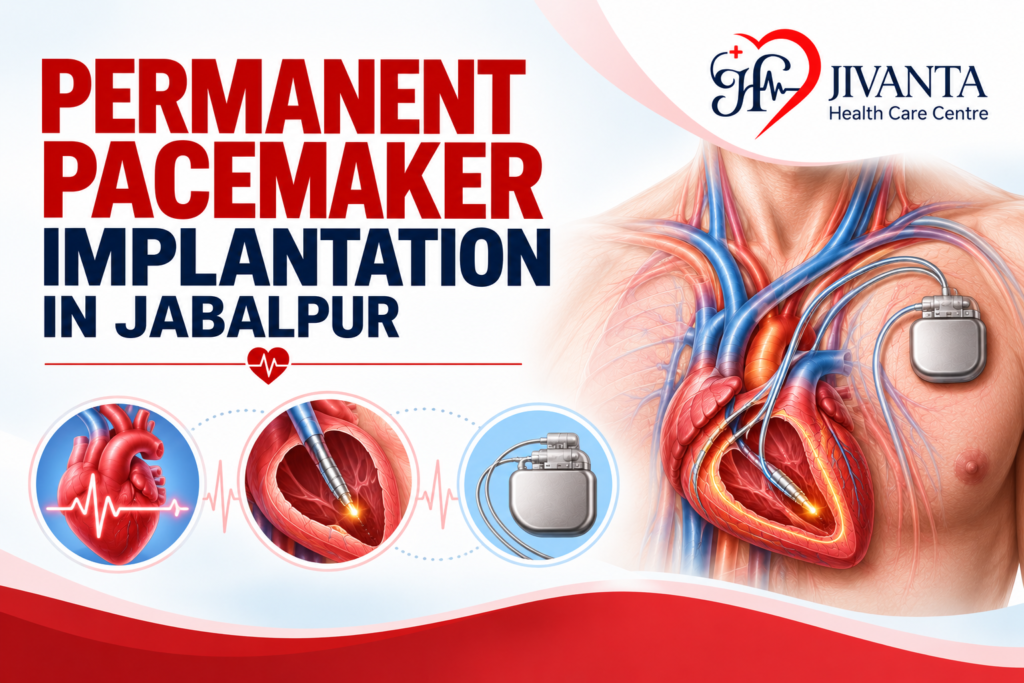
Permanent Pacemaker Implantation in Jabalpur: Dr. Animesh Gupta Explains Indications, Procedure, Recovery and Follow-Up
Permanent Pacemaker Implantation in Jabalpur may be recommended for selected people whose heart beats too slowly or whose electrical signals do not travel through the heart normally. A pacemaker is a small electronic device that helps regulate the heartbeat when the heart’s natural electrical system cannot maintain an adequate rhythm. Whether a person needs one depends on their symptoms, heart rhythm recordings, medical history and specialist assessment. Permanent Pacemaker Implantation in Jabalpur should only be considered after an individual evaluation. Dr. Animesh Gupta is a cardiologist at JIVANTA Health Care Centre in Jabalpur. According to the information provided about his practice, he holds MD (Medicine) and DM (Cardiology) qualifications, received advanced training at Government Jayadeva Hospital in Bengaluru, and worked as a Consultant Cardiologist at Apollo Hospital, Hyderabad. His clinical work includes invasive and non-invasive cardiac procedures. JIVANTA Health Care Centre lists permanent pacemakers among its cardiac services. People searching for Pacemaker Implantation in Wright Town, Jabalpur may have questions about symptoms, when a device is advised, how the procedure is performed, and what recovery involves. A local search for Pacemaker Implantation in Wright Town, Jabalpur should lead patients to clear information about assessment, procedure planning and follow-up. This guide explains the basics of pacemaker therapy in patient-friendly language. It is general information and cannot replace an individual assessment by a qualified cardiologist. What Is a Permanent Pacemaker? A permanent pacemaker is a small electronic device placed under the skin, usually near the upper chest. One or more insulated wires, called leads, may connect the device to the heart. The pacemaker monitors the heart’s electrical activity and delivers electrical impulses when needed to help maintain an appropriate heart rate. The device does not treat every type of heart disease and is not required for every irregular heartbeat. It is mainly used for certain slow heart rhythms and problems with the heart’s electrical conduction system. The type of device and lead arrangement depend on the rhythm problem, the heart’s condition and the patient’s overall health. A person seeking Pacemaker Implantation in Vijay Nagar, Jabalpur should receive an explanation of the recommended system and its purpose. A person exploring Pacemaker Implantation in Napier Town, Jabalpur should know that the decision is based on clinical findings, not simply on a low pulse reading. This is a key part of planning Permanent Pacemaker Implantation in Jabalpur appropriately. Why Might Someone Need a Pacemaker? The heart has an electrical system that coordinates its contractions. If the electrical impulse is generated too slowly or is delayed or blocked as it travels through the heart, the heartbeat may become too slow to meet the body’s needs. A pacemaker may be considered for certain conditions. People may also search for Slow Heartbeat Treatment in Jabalpur or Heart Block Treatment in Jabalpur when trying to understand these rhythm problems. Slow Heart Rate (Bradycardia) Bradycardia means that the heart rate is slower than expected. Some people naturally have a low resting heart rate without symptoms, so a number alone does not automatically mean a pacemaker is required. A device may be considered when a slow rhythm is linked to symptoms or creates a clinically important risk. Heart Block Heart block occurs when electrical signals between the upper and lower chambers of the heart are delayed or interrupted. The seriousness varies by type and degree. Some forms require monitoring, while advanced forms may need a pacemaker. Patients searching for Pacemaker Implantation in Wright Town, Jabalpur should have the type of heart block and its severity explained by their cardiologist. Sinus Node Dysfunction The sinus node normally initiates the heartbeat. If it does not work properly, the heart may beat too slowly or pause. Treatment depends on the rhythm pattern and whether symptoms are related to it. Certain Rhythm Problems After Cardiac Procedures In some patients, a significant conduction problem develops after heart surgery or another cardiac procedure. If it is not expected to resolve, permanent pacing may be recommended. For people researching Pacemaker Implantation in Vijay Nagar, Jabalpur, it is important to understand that only a cardiologist can determine whether a pacemaker is appropriate. Patients looking into Pacemaker Implantation in Vijay Nagar, Jabalpur should bring relevant reports and discuss symptoms during assessment. Some causes of a slow heart rate, including certain medicines or temporary medical conditions, may need to be reviewed before a permanent device is considered. Symptoms That May Need Cardiac Evaluation Symptoms associated with a slow or interrupted heartbeat can vary. Some people notice only tiredness, while others may experience more serious episodes. Possible symptoms include: Dizziness or light-headedness Fainting or near-fainting Unusual fatigue Shortness of breath during ordinary activity Reduced exercise tolerance Confusion or weakness during episodes Awareness of pauses or an unusually slow pulse These symptoms can also occur because of other health conditions. They should not be used to diagnose a rhythm disorder without appropriate assessment. People looking for Pacemaker Implantation in Adhartal, Jabalpur should seek medical evaluation if symptoms are recurring, unexplained or affecting everyday activity. Fainting, severe breathlessness, chest pain or symptoms that begin suddenly may require urgent assessment rather than a routine appointment. How Is the Need for a Pacemaker Assessed? Before recommending a device, a cardiologist reviews symptoms, medical history, medicines and test results. The aim is to establish whether the symptoms are linked to a rhythm problem and whether pacing is likely to help. Electrocardiogram (ECG) An ECG records the heart’s electrical activity. It can identify several rhythm and conduction abnormalities, although a short ECG may not capture an intermittent problem. Holter or Ambulatory Rhythm Monitoring A Holter monitor or another wearable rhythm monitor records heart activity over a longer period. It may help identify pauses or slow rhythms that occur only occasionally. Echocardiogram An echocardiogram uses ultrasound to assess the heart’s structure and pumping function. It may be recommended depending on the suspected condition and the patient’s medical history. Blood Tests and Medication Review Blood tests can help identify certain reversible contributors to rhythm abnormalities. A clinician may also