
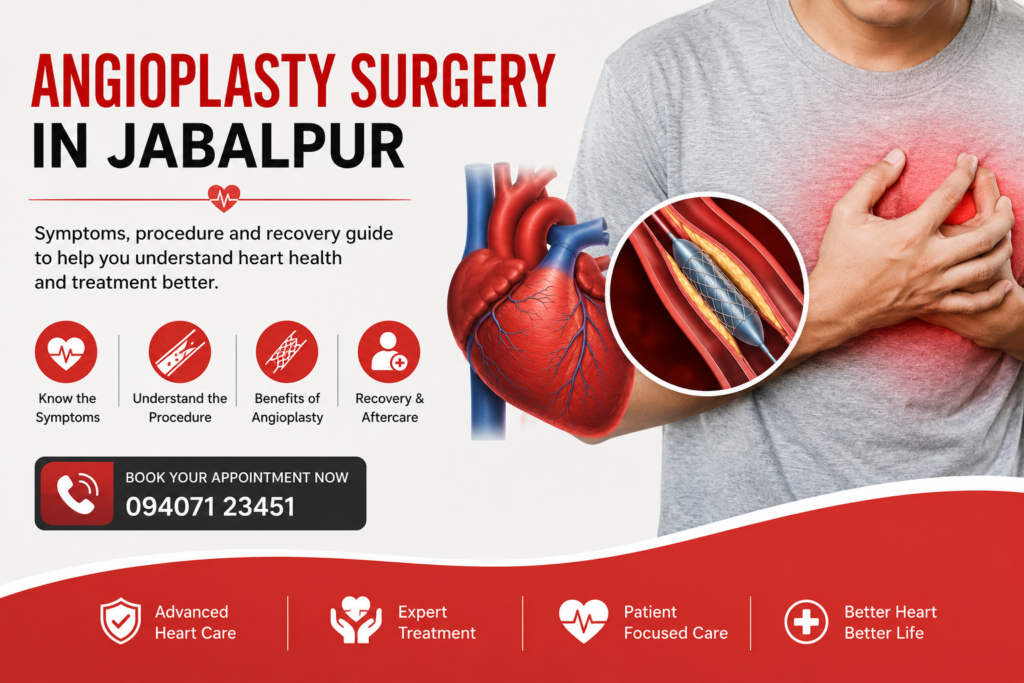
Angioplasty Surgery in Jabalpur: Symptoms, Procedure and Recovery Guide
Angioplasty Surgery in Jabalpur is one of the most effective and commonly performed cardiac procedures used to restore blood flow in blocked or narrowed heart arteries. Heart disease continues to be a major health concern, and many patients ignore early warning signs until a serious cardiac event occurs. Understanding the symptoms that may indicate blocked arteries, knowing how angioplasty is performed, and learning about the recovery process can help patients seek timely treatment and protect their heart health. Dr. Animesh Gupta, a highly experienced Cardiologist in Jabalpur, is known for providing advanced heart care, accurate diagnosis, and modern cardiac treatments. With more than 17 years of experience, over 5,000 successful cardiac procedures, and thousands of satisfied patients, Dr. Animesh Gupta has established himself as one of the most trusted heart specialists in Jabalpur. Patients looking for expert guidance regarding Angioplasty Surgery in Jabalpur often consult Dr. Animesh Gupta because of his expertise in interventional cardiology, patient-focused care, and commitment to delivering the highest standards of heart treatment. Best Cardiologist in Jabalpur – Dr. Animesh Gupta Choosing an experienced cardiologist plays an important role in successful heart disease management. Dr. Animesh Gupta is a trusted Heart Specialist and Interventional Cardiologist in Jabalpur with expertise in diagnosing and treating various cardiovascular conditions. Patients consult Dr. Animesh Gupta for: Angioplasty Surgery Coronary Artery Disease Treatment Chest Pain Evaluation Heart Attack Management Angiography Hypertension Management Preventive Cardiology Advanced Cardiac Procedures His simple and patient-friendly approach helps patients understand their condition and receive the most appropriate treatment. What is Angioplasty Surgery? Angioplasty Surgery in Jabalpur is a minimally invasive procedure performed to open blocked or narrowed coronary arteries that supply blood to the heart muscle. Coronary artery blockage occurs when fatty deposits called plaque accumulate inside blood vessels. Over time, these blockages reduce blood flow and may increase the risk of heart attack. During angioplasty: A thin catheter is inserted into a blood vessel. The catheter is guided to the blocked artery. A balloon is inflated to widen the artery. A stent is usually placed to keep the artery open. The procedure helps restore normal blood flow and reduces symptoms associated with coronary artery disease. Symptoms That May Indicate the Need for Angioplasty Surgery Many patients experience warning signs before significant artery blockage develops. Chest Pain (Angina) Chest pain is one of the most common symptoms associated with coronary artery disease. Patients may experience: Pressure in the chest Tightness Burning sensation Discomfort during physical activity Persistent chest pain should never be ignored. Shortness of Breath Difficulty breathing while walking, climbing stairs, or performing daily activities may indicate reduced blood flow to the heart. Fatigue Unexplained tiredness and low energy levels can sometimes be linked to underlying heart disease. Pain Radiating to Other Areas Heart-related discomfort may spread to: Left arm Neck Jaw Shoulder Upper back These symptoms require prompt medical evaluation. Dizziness and Lightheadedness Reduced circulation can sometimes cause dizziness, weakness, or fainting episodes. Excessive Sweating Sudden sweating without obvious physical exertion may indicate a cardiac problem. Heart Attack Symptoms Severe coronary blockage may result in a heart attack. Symptoms may include: Intense chest pain Shortness of breath Nausea Sweating Weakness Arm pain Immediate emergency care is essential in such situations. Common Causes of Coronary Artery Blockage Several factors increase the risk of artery narrowing and heart disease. High Cholesterol Excess cholesterol contributes to plaque formation within blood vessels. High Blood Pressure Long-standing hypertension damages artery walls and increases cardiovascular risk. Smoking Smoking is one of the leading causes of coronary artery disease. Diabetes Diabetes significantly increases the likelihood of arterial blockage. Obesity Excess body weight places additional strain on the cardiovascular system. Family History Genetic factors may contribute to heart disease risk. Sedentary Lifestyle Lack of physical activity can negatively affect heart health. When is Angioplasty Surgery Recommended? Cardiologists may recommend Angioplasty Surgery in Jabalpur when: Coronary arteries are significantly blocked. Chest pain persists despite medications. Blood flow to the heart is reduced. A patient experiences a heart attack. Diagnostic tests reveal severe coronary disease. The decision is based on individual patient evaluation and diagnostic findings. How is Angioplasty Surgery Performed? Many patients feel anxious before undergoing angioplasty. Understanding the procedure often helps reduce fear and uncertainty. Step 1: Cardiac Evaluation Before angioplasty, several tests may be recommended: ECG Echocardiography Stress Test Blood Tests Coronary Angiography These investigations help determine the severity and location of blockages. Step 2: Catheter Insertion A small catheter is inserted through an artery in the wrist or groin. The catheter is carefully guided toward the blocked coronary artery. Step 3: Balloon Angioplasty A tiny balloon is inflated inside the narrowed artery. This widens the artery and improves blood flow. Step 4: Stent Placement Most patients receive a stent during the procedure. The stent helps: Keep the artery open Improve blood circulation Reduce the risk of future blockage Step 5: Completion of Procedure Once adequate blood flow is restored, the catheter is removed and the procedure is completed. The entire process generally takes one to two hours. Benefits of Angioplasty Surgery Modern angioplasty offers several advantages. Improved Blood Supply The procedure restores blood flow to the heart muscle. Relief from Symptoms Patients often experience improvement in: Chest pain Breathlessness Fatigue Reduced Risk of Heart Attack Treating artery blockages lowers the likelihood of future cardiac events. Minimally Invasive Treatment No large surgical incision is required. Faster Recovery Recovery is generally quicker compared to open-heart surgery. Recovery After Angioplasty Surgery Recovery varies among patients, but most individuals experience gradual improvement over the following weeks. Immediate Recovery Patients are monitored after the procedure to ensure stable heart function. Hospital Stay Many patients can return home within one or two days. Returning to Daily Activities Light activities may usually be resumed within a few days, depending on medical advice. Medication Compliance Taking prescribed medications regularly is essential for maintaining stent function and preventing complications. Follow-Up Appointments Regular follow-up visits help monitor heart health and long-term recovery. Lifestyle Changes After Angioplasty Successful recovery depends